
For transparent and translucent plastic plates, plastic sheets, films, glass, etc., it is generally necessary to measure parameters such as transmittance and haze.
Haze, the ratio of the luminous flux passing through a specimen to the luminous flux incident on it (expressed as a percentage), is called transmittance. Haze is the ratio of the scattered light flux that deviates from the direction of the incident light through the specimen surface to the transmitted light (expressed as a percentage). When light strikes a transparent or translucent object, it is partially reflected directionally and partially diffusely reflected. Upon entering the specimen, some is absorbed and some is transmitted. Of the light exiting the specimen, the main transmitted portion travels according to the law of refraction, while some is hemispherically scattered, resulting in a scattered direction. Transmittance haze is the portion of hemispherically scattered light exceeding a certain angle.
Haze, also known as haze in English, is different from transmittance. Transmittance refers more to the percentage of luminous flux to the incident luminous flux, which is what we usually feel as “bright.” Haze refers to the percentage of transmitted light intensity that deviates from the incident light by more than 2.5° to the total transmitted light intensity. A greater haze means reduced transparency and image quality, which is the feeling of “unclear vision.”
For example, household glass generally needs to be highly foggy: this allows light to pass through (i.e., the room is bright) but also provides concealment (the scene cannot be seen clearly).
The national standard GB/T 2410-2008 “Determination of light transmittance and haze of transparent plastics” clearly points out the test method for measuring haze.
The following is the operation method of YH1810 to measure glass haze.
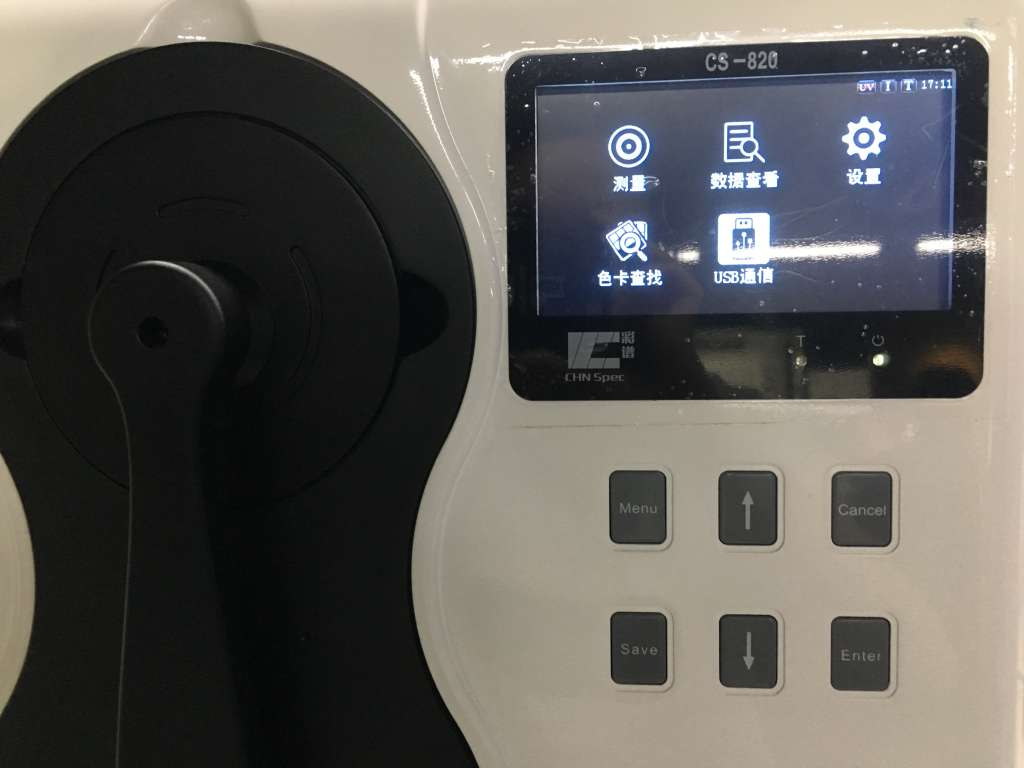
Step 1: Connect to the computer and click USB communication
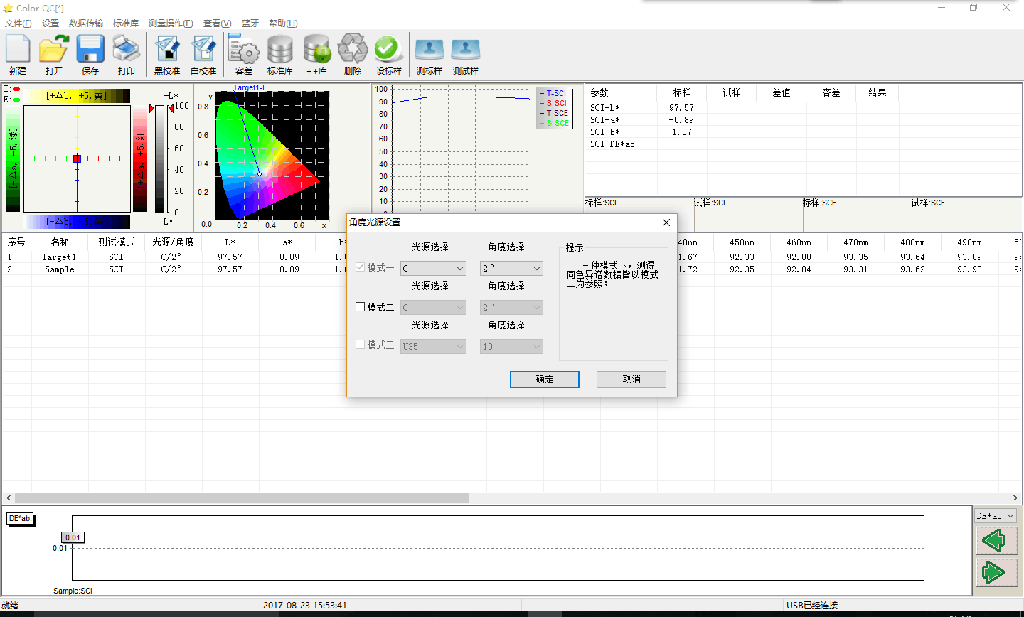
Step 2: Adjust the test settings
According to the national standard, the test conditions for haze are C light source, 2° viewing angle, and the test parameters are adjusted to : haze
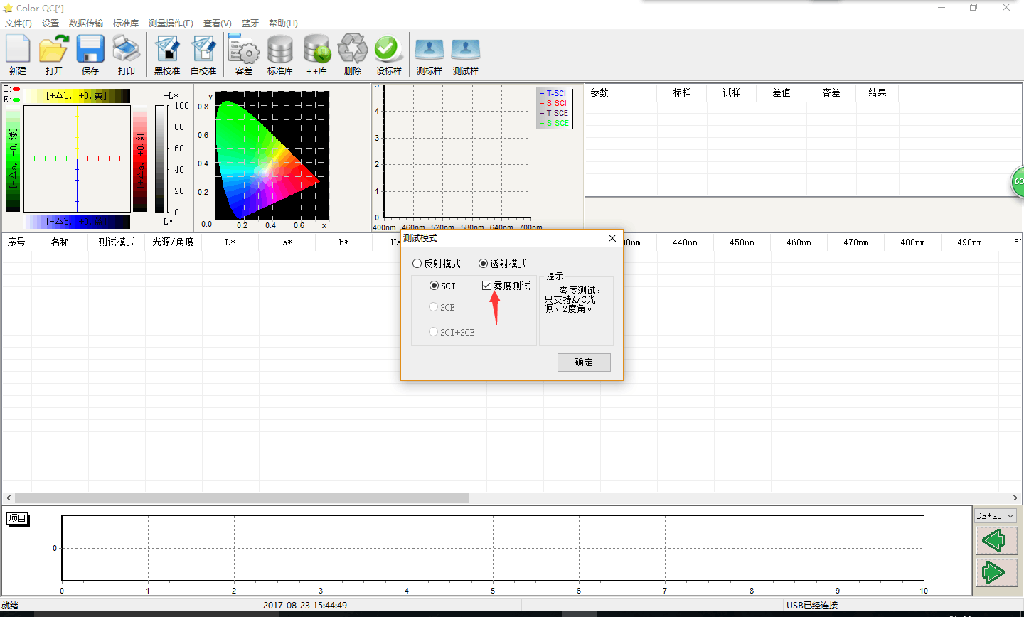
Step 3: Transmission Calibration
Haze measurement uses transmission measurement, and calibration also requires transmission calibration. The “black and white calibration” of the reflectance measurement mode is unnecessary and can be skipped. Haze transmission calibration can be performed using two methods: ” 0 calibration ,” which involves completely covering the test port with an opaque object ; in this case, a standard blackboard; and ” 100% calibration ,” which involves opening the test port to air , allowing 100% light to escape.